The very first time I crossed the border from Tijuana into the US, I was 13 years old. I was leaving behind everything I knew, and even though it wasn’t all great, it was ALL I knew. As we made it past the visa inspection and were allowed to enter a different country, a different world, I was surprised by a sight that is probably innocuous to most people. As we drove onto the 5 freeway, the highway opens into 6 lanes, and for some reason I was mesmerized by that. I had never seen a road that big. It’s as if subconsciously I knew I was entering a world that was much bigger than the one I knew. The massive scale of a freeway was enough to let me know that this would be a world I would be swallowed up by. And not by the entirety of it, but only a small section of it would be enough to crush me. I would disappear into a small corner of this giant place, without ever knowing the true scale of it.
When we first came to this country, it wasn’t my whole family that came with me and my dad. It was just my sister and I. Only the two of us were allowed to venture into California at first. My mom and my two brothers would join us eventually.
A friend of my dad rented us a room in her house. A small guest room with a twin bed. Around this time my dad got a VHS copy of The Matrix. He put a small TV/VCR combo on a chair, and we sat on the floor and watched a film in a language that we couldn’t understand. At the end of the credits there was a behind the scenes feature that made me think, one day, I want to learn 3d animation. I had the thought, eating tacos on the floor of that room. A thought I wouldn’t revisit again for almost 10 years until someone believed in me enough to tell me that I owed it to myself to do something with my life.
Years passed and after a long series of terrible life decisions, I was living in an office space in an industrial park. I remember thinking that my life as a digital artist was over… I was 28 years old.
I think now about all the times I wanted to give up. How many times I questioned the motivation for doing anything and what the point of anything was.
In the Odyssey, as Odysseus approaches his home and his long lost love, his will finally starts to break:
“He growled inside, like a bitch guarding her vulnerable pups, ready to fight on seeing a stranger. He growled inside with anger at their evil ways, but striking his chest he restrained his heart, saying: ‘Patience, my heart. You endured worse than this when the Cyclops, with his huge strength, ate my loyal friends: yet you held firm until your cunning released you from that cave where you faced death.’”
Similarly, there is a moment in Dostoyevsky’s Brothers Karamazov where Alyosha falls to the ground in despair and existential dread. What he knew about the world no longer made sense. Suddenly something in him awakens:
“…with each moment that passed he felt plainly and almost palpably that something as firm and unshakeable as this celestial vault was descending into his soul. Something that was almost an idea took mastery of his intellect – and now for the rest of his life and until the end of the ages. A feeble youth had he fallen to the earth, yet now he arose a resolute warrior for the rest of his life and knew and felt this suddenly, at that same moment of his ecstasy. And never, never for all the rest of his life would Alyosha be able to forget that moment. ‘Someone visited my soul in that hour,’ he would say later with resolute faith in his words …”
I can’t recall how many times I had those moments. Somehow, someway, I was able to pull myself through but every time something in me died. Something was numbed to the pain. I thought it was a great ability, to be able to kill things inside me. Until it didn’t work anymore. I died many times over, but I always neglected the rebirth part. So I continued on for years, inhabiting things that were dead without realizing it.
In 2017, after a long series of less terrible life decisions, I went to Japan for the first time.
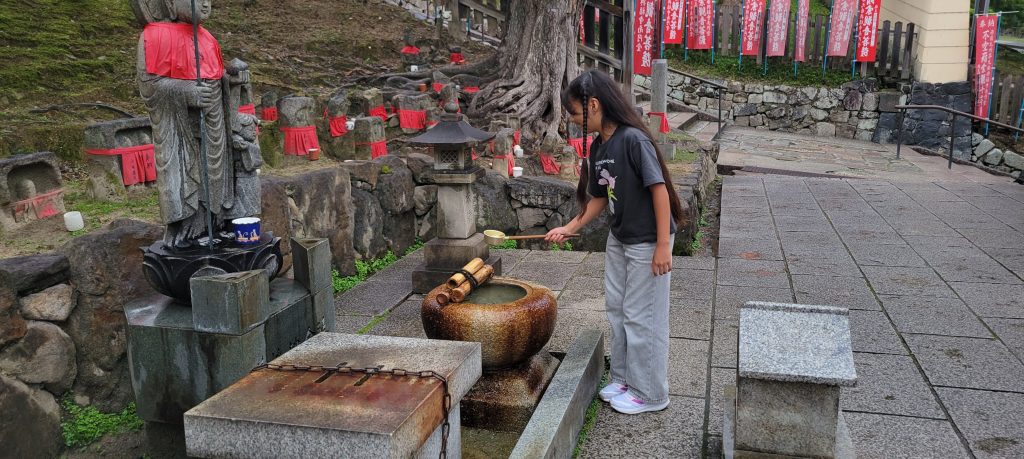
I remember lighting incense and candles at every temple and shrine, but especially at the Fushimi Inari shrines. I prayed for my nieces most of all. They were 2 and 6 at the time. The new generation of my family.
I remember on one occasion seeing my oldest niece, around 4 at the time, playing in my living room. She was arranging all her toys in perfect order on her little Disney princess table. Instead of being enchanted by the sight, I had an overwhelming fear take over my soul. For months, I thought, “Oh no, she is getting too comfortable, but life isn’t comfortable, life is miserable, it’s pain, it’s suffering, what is going to happen when she finds out that life cannot be arranged neatly like her little toys?”
I was having an existential meltdown on her behalf. If this isn’t neurotic, I don’t know what is.
I had this crippling fear that the world would be too big for them. A fear that reality would break them.
The world was this immense source of fear for me. When I started traveling, everywhere I went, the scale of the cities and the buildings felt massive to me. The more I returned to some of those places in the UK, Eastern Europe, Japan… there is now a really strange feeling that nothing is as colossal as it felt the first time.
The world became smaller and as a result, safer.
It took me decades to learn this. I wanted my nieces to experience this as soon as possible. So that the world wouldn’t be a scary place for them. This time I did not have to light incense and candles for them. I took them there so they could do it themselves. I wanted them to experience the exact thing that allowed me to make the world smaller, and, consequently, safer.
“Querido padre: Es posible que en el fondo tu problema, como el mío, no haya sido más que un problema de soledad. Y, sobre todo, de no haber encontrado el punto medio entre la soledad y los otros. Hasta ahora cada cual ha venido ocultándolo a su manera, aunque las circunstancias no nos hayan facilitado mucho esta labor.”
-Juan José Millás
I have almost no memories of my father speaking to me while growing up. Or my siblings for that matter. One of the few good memories I have goes back to the days when we traveled around Mexico following rodeos. We could sit in his truck for hours going from city to city and he would not utter a single word. One time I took a little radio with me. It had a cassette and CD player integrated. I remember it was bright red and yellow. I really liked that. That day I casually bought a few bootleg CDs of a popular comedian of the time. I popped one in, and suddenly the 2 – 3hr drive was filled with our laughter. I don’t remember him ever laughing like that unless he was drunk. Every time I traveled with him after that, I always tried to take that little radio with me.
I have no memories of him in my early years. Except one. Him yelling at my mother as she sat on the edge of the bed crying. I must’ve seen that through a crack in the door. Then nothing until I was 6 and in every faint memory I have, he was drinking. He laughed when he drank. The problem always was when he was sober.
Whenever he walked into the house an oppressive silence would follow him. An intensity that would suffocate all life out of the room. We would sit at the table and eat in absolute silence, terrified at the possibility that he might explode. These scenarios were not an everyday thing, but they’re all I can remember. We only ever saw him 3-4 months out of the year, not consecutively. The rest of the time he lived and worked in the US. A typical migrant worker story.
The idea of ever wanting to be like him never crossed my mind. Do boys think of being like their fathers? I don’t recall ever wanting to be like anyone to be honest. I don’t really know why that is.
Years later, sometime around my 3rd year of sobriety I became the secretary of an AA meeting where I met a group of people who fundamentally changed the course of my life. By then all of them had moved on to different stages of their lives. I was there to do what they once did when I first looked for an answer to my drinking problem. I sat at the table where I met my first sponsor 8 years prior. I did all the things I saw them do for no other reason than, I did not know what to do with myself. I figured if I did exactly what I saw them do, my life would change. I was 29 years old at the time.
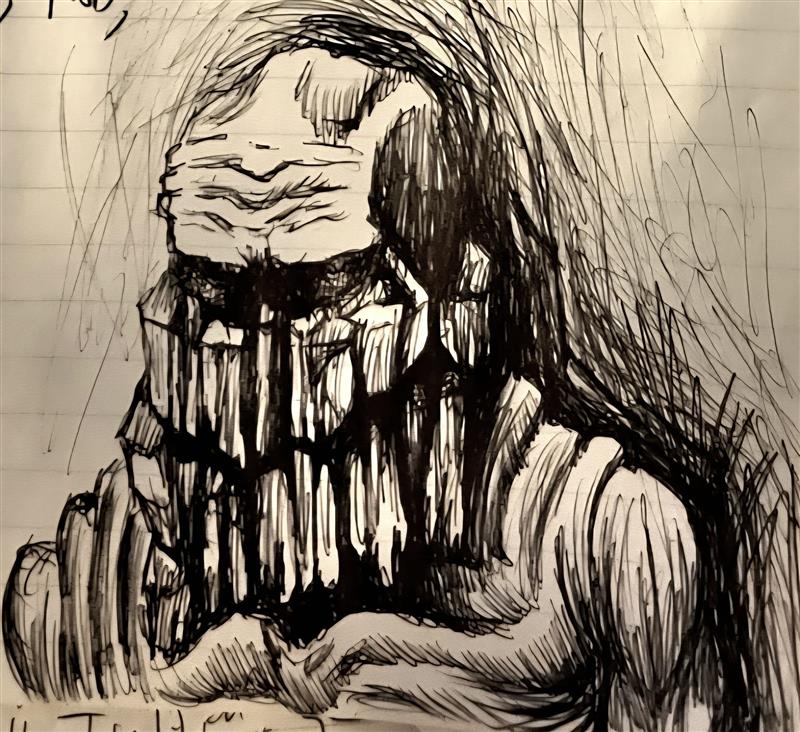
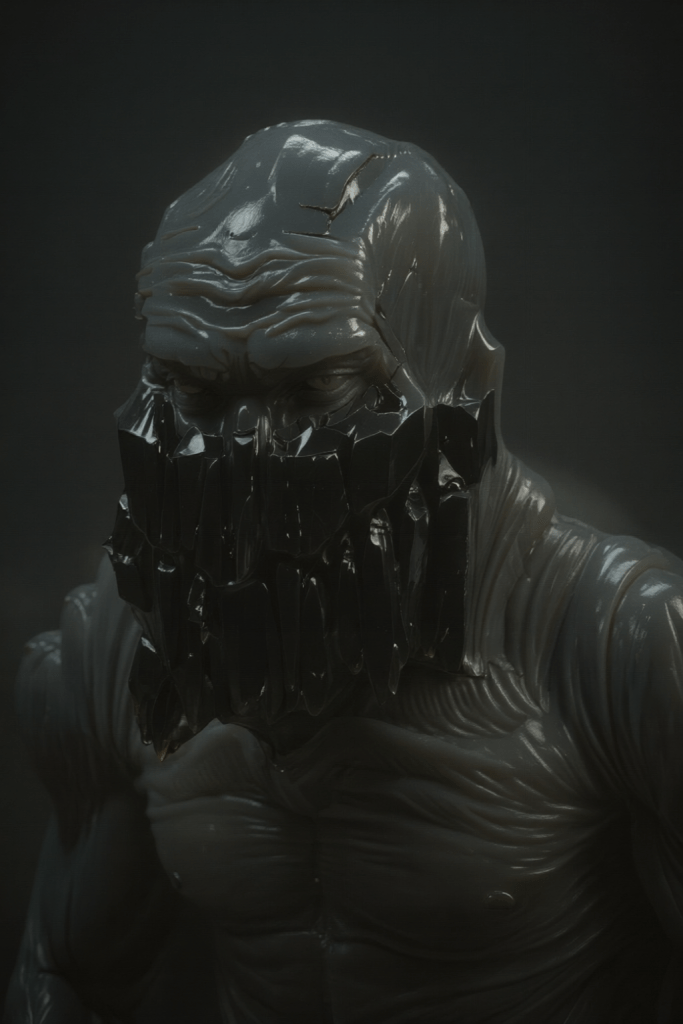
I used to draw a lot during the meeting. The secretary’s pages were filled with names of newcomers, people celebrating sobriety milestones and whatever symbols and creatures came to my mind. My drawings sometimes disturbed people. I always found that strange and funny, these things live in my head so I am used to them. One night however, I drew something that even I was afraid of. Usually I draw the same characters over and over again except this one, this one I drew only once and never did it again. I never even looked at it again until years later.
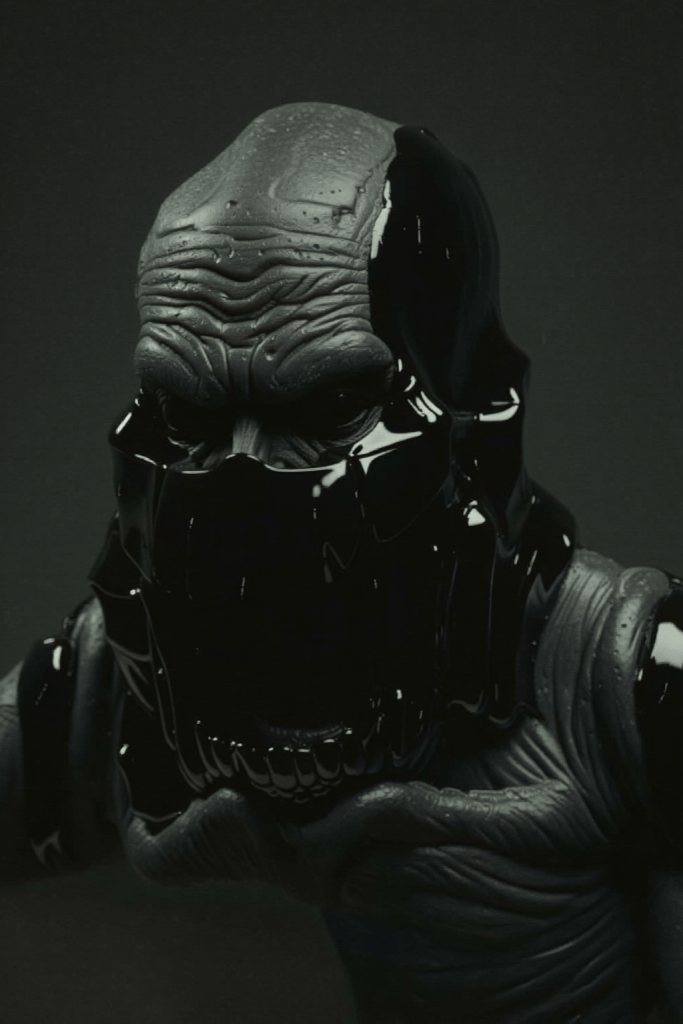
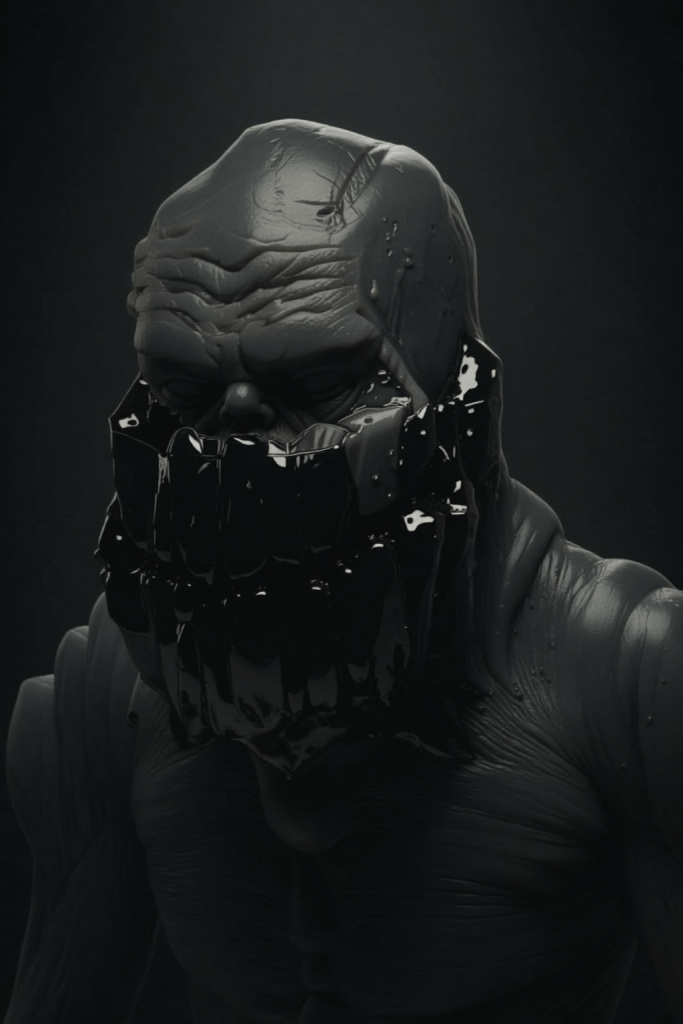
Recently, I was having a conversation with a friend about this drawing. I was explaining this was my way to pull out contents of the unconscious that had not yet been integrated. I mentioned that I usually make animations of these characters and in a way I exorcise them. But not this one. This one, I said, would freak me out if I saw it move. It’d become real.
I thought about this for a few days. Why would I say that? Why would this little drawing cause that reaction? After all these years, it could only mean that this thing still lived inside me.
I remember telling my therapist once that for the longest time I thought I needed glasses, or that there was something wrong with my vision. I mentioned that whenever I walked into a room or anywhere in public, people’s faces were blurry. I had a hard time recognizing people I had met before because of this. Somehow I believed that I just needed glasses but every time I went to get myself checked I was told that my vision was perfectly fine. Strange. Why then would people’s faces be blurry all the time? I never once thought about the contradiction of seeing everything in my vision perfectly in focus except people’s faces. My therapist explained what dissociation is. I had been living like this since childhood.
It makes perfect sense now why I never wanted to be like anyone. I never learned to see other people. I never wanted to be a part of a group or had a desire for friends. I never thought of being included or set aside or anything. Everything was a blur. My mind always looked past all the chatter and noise of regular interactions and hyper focused on the massive void hovering over everything. Everyone going about their business around me, like a fast paced streak, and all I could look at was the black sun that everyone else seemed to ignore.
Isolation in plain sight. And no one ever recognized it. Even me.
One of the last conversations I had with my therapist was about PTSD. She wanted me to go through some tests for diagnosis and even mentioned adult autism screening. I didn’t think it was important, I believed that I had already made it this far in life without diagnosis so why would I need them now? That seemed perfectly reasonable to me at the time. Then covid came and I never saw that therapist again. I never saw a professional again until recently. 7 years had gone by and I had left all of this completely unaddressed.
During one of my recent travels for AA service, I was committed to go to a conference in Hawaii. Something I had done many times before. I took a book with me called Netochka Nezvanova, and I would’ve never imagined that some of the scenes depicted in this story would unlock repressed memories, more like repressed feeling as the memory was to some degree conscious.
In the book, Netochka, a small girl living with her mother in abject poverty is constantly haunted by the erratic behavior of her alcoholic stepfather. There was a scene where Netochka is standing on the stairs leading up to their apartment, after having stolen money from her mother so that her stepfather could continue to drink. Netochka starts crying uncontrollably, standing on the stairs, trying to understand her father’s behavior. A complete and total loss of innocence.
Suddenly my mind replays one of my core memories. My father in one of his fits of uncontrollable rage, picks up a carton of milk and throws it at my mother from across the living room while she was in the kitchen cooking his dinner. Still, to this day, I remember clearly the sound she made as she collapsed on the floor. Then I saw him walk towards her and drag her by the hair. That is when I jumped on his back, tried to hit him and choke him, but I don’t recall having any effect on him. I was 12.
I had always remembered this. I always knew that this happened. But this time, after reading that scene so brilliantly described by Dostoevsky, I remembered the one part of the memory I had left unconscious. The look of my three siblings sitting on the stairs, with a terrified look on their face, crying, as I was hanging off my father’s back trying to stop him. I never once thought about that part of the memory until that day, while sitting on a flight headed to Hawaii. A thought came to me: I never once had the chance to just sit on the stairs and cry whenever things like that happened. It all caught up with me that day, in the form of a panic attack, 30,000 feet in the air. These have become more and more common as I have gotten older and I no longer have access to the rage that used to muffle the panic.
This event, and many more like it from him, my uncles and even my aunts, imprinted an identity on me that I never knew I had been acting out until recently. The protector. The savior. The one who self-sacrifices to ensure that others live. Albeit an incredibly imperfect one at that. Paradoxically, I also adopted the identity of the enraged man, volatile and yet, completely silent. Isolated in his own muteness, as if my mouth had been sealed shut by sharp rocks. An extreme contradiction.
It was very strange, I thought. I had experienced worse sights at the rodeos where I worked as a child. Men beaten bloody. Fatal accidents before I could even understand the meaning of death. Getting snatched a few times and having to defend myself like a rabid dog or face disappearance. Violence on a large scale. Violation of space and autonomy.
But this one experience. This one memory, had more power over me than all the rest combined.
The rodeos taught me that the world was dangerous. My family taught me that nowhere is safe.
It was easy to resent my father for the way he acted. It’s what I did for a long time. That is, until I had to face the horribly painful task of having to become a man. A respectable man. A man of substance. It was and continues to be one of the most difficult things I have to work on.
Without wanting to, and without noticing, I became my father. The same oppressive silence that followed him, followed me. The same fits of uncontrollable anger, the shouting, the intense vibration that warns everyone around me: do not come close to me. Don’t look at me. Don’t talk to me. Don’t touch me.
With a highly dysregulated nervous system, the temper tantrums of children in my house started to feel like blades going through my ears and lacerating my brain. The family gatherings started to feel overwhelming and my body responded as if in danger. I started to notice a shift in the intensity of these feelings. My walls became thicker and thicker. No one could reach me. With age, with a worsening insomnia, with a debilitating depression, everything started to feel horribly close to a breaking point.
That’s when I understood, for the first time, that all these things that we considered personality traits passed from father to son aren’t traits at all. They are symptoms. Symptoms of an unseen, undiagnosed problem that silently killed all the men in my family. My aunts have recently told me that when my father stays at their homes, he often wakes up in the middle of the night screaming. Maybe he has reached a breaking point too.
That creature I drew, I always thought it was me, and that terrified me. It is, in fact, an amalgamation of the entire history of trauma of all the men in my family. Some absorbed it more than others, and the ones who didn’t, got to watch the shock absorbers destroy themselves from a distance. Because we couldn’t let the walls come down for long enough to allow someone to tell us that we didn’t have to be stuck living like that. The men in my family were stuck acting out a sickness beyond their control. They never got the chance to understand what was happening to them.
I had to figure it out all on my own. Like everything else in life. And where there used to be bitterness at the path I was forced to take, there is now a dim glimmer of hope, a sense of victory even, at locating the correct term, the correct words, the correct symptoms, and by extension, the correct way to heal.
People often talk about forgiveness but rarely does anyone speak of understanding. There is no forgiveness without a foundation of understanding. And as I put the last pieces of the puzzle together I understand that to forgive the men in my family seems almost ridiculous. To think I can judge or forgive men who lived and died in circumstances far more traumatic than anything I experienced in life. In a level of poverty I will never know in my lifetime. Drowning in a deprivation and neglect I will never understand. “Forgive without condoning” as the online self-help merchants of bullshit like to say. The shallow, commercialized version of modern “healing” falls apart against the brutal, grinding reality of multi-generational poverty. There is no time for that when you are brought to the world only to survive. Never to live.
It was their lives, however they lived them, that have allowed me to be here, right now, figuring it all out. It has been my responsibility to understand why so I don’t continue to live like them and more importantly, so that I don’t continue to put that energy back into the world.
It is baffling to become a blank slate at 40 years old. You think that happens when you are younger and you continue to reinvent yourself according to what you want in life. You never expect, or at least I didn’t, that I’d have to continue to do that for the rest of my life. And yet, here I am, trying to figure out who I am, all over again.
But with one small advantage I did not have any other time I’ve had to rebuild myself. If I strip my father of the symptoms, I am left with the reality of a man that had an immense determination to get ahead in life despite the poverty he was born into. Who went to work during snowstorms for a family that he barely got to see. Who did the impossible to bring us 3,000 miles away from everything we knew and to a different world for a better life.
That kind of grit, that kind of persistence, and the resolve to beat the odds is really hard to come by in life. He must have been born with all of that. And if he has all those things then I must have them too, because I am his son.